
From Growtopia Player to Game Developer: The Story Behind TopiaLand

I started playing Growtopia in 2015. Within a few months I had dropped almost every other game. Building, farming, splicing seeds, trading with strangers at 3 AM: nothing else gave me that feeling.
Years went by, and one question kept coming back to me: could I make a game like this myself?
Two failed attempts
In 2020 I bought a book on Unreal Engine. I played around with it, got bored and closed it.
In 2021 I tried again, and this time something started to appear on screen. On November 4, 2021 I posted a 2D Growtopia-style character to YouTube:

But most things didn't work. I spent weeks, sometimes months, searching for tutorials on exactly what I wanted to build, and they simply didn't exist. I gave up and went back to playing Growtopia.
Then I had an idea: what if it wasn't 2D? What if it was 3D? I started over, and for a while everything went well. Inventory, blocks, a world:


Most of my videos actually went to Instagram, as stories and posts. They're still there :)
But I had built everything without thinking about servers and replication. Turning a single-player prototype into a multiplayer game meant rewriting almost everything, and again I couldn't find the resources I needed. I stopped. Those projects are still sitting on my drive.
Why I came back
Even though I had dropped those projects, I never stopped learning Unreal. Since 2021 I kept learning it, little by little.
Meanwhile, the game I loved was changing. Bots and cheats had been a problem in Growtopia for years, every year seemed to bring a new exploit, and most of the players I knew had left. By the summer of 2025 I was bored too.
So on the morning of September 8, 2025, I started TopiaLand. This time I made myself one promise: I'm not quitting.
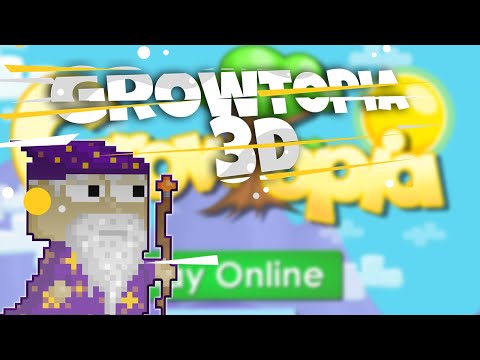
After building a few systems I was so happy that I wanted to share it as a YouTube series. The next day I posted the first episode of my devlog:
I worked on it day and night. I still couldn't find the resources I was looking for, but this time I had made a promise, so I kept going. To move faster I bought ready-made assets and adapted them to my game, and that really worked. Before long I had most of the systems written.
The hard parts
Servers. From mid-November 2025 to New Year's Day I did almost nothing but learn how game servers work. Some nights I slept two or three hours and went to work. I even researched during breaks at work. Meanwhile I kept posting my devlog, and I started sharing on Instagram too. Some people left kind comments, and that made me genuinely happy.
Worlds. I had learned how to set up a server, but I had forgotten something. In February 2026 I faced the real question: how do you build a world system where every player can own a land and anyone can visit any land? I can make the game itself in Unreal, but I had never written a backend. I could have bought a ready-made backend from professionals, or paid for services like Microsoft's PlayFab. Instead of spending that money, I decided to write it myself, learning as I went, with Claude, an AI assistant, at my side.
That took six to seven months. There were days I didn't sleep for a day and a half. I didn't even have time to play games anymore; I stopped playing Growtopia completely. The project had become serious. At one point I came very close to giving up.
When it finally worked, entering a land took a minute and a half. That was ridiculous: players should be able to hop in and out quickly, just like in Growtopia. But I had forgotten something: that game is 2D, mine is 3D. In a 2D game you switch worlds in seconds; in 3D, every block of every world has to be loaded and built. I asked around in many places, and nobody could help.
In the seventh or eighth month I finally got that minute and a half down to about 10 seconds. I was so happy; for a 3D game, 10 seconds felt ideal. Entering a land that's already open took just 2-3 seconds. Each land also used 500 MB to 1 GB of server memory; I researched and brought that down to around 200 MB. I still wasn't satisfied, but I had focused on this so much that the rest of the project wasn't moving. So I set it aside and went back to building other systems.
Players. While doing all that research, I opened a Discord server and shared the game as a zip file. Out of all my friends and followers, two or three people tried it. Some said they were afraid of getting a virus. I put it on Steam Playtest, and still almost nobody downloaded it. But then strangers started showing up. People who were curious, people who genuinely wanted to help. They played, they reported bugs, they told me what they liked. That's what kept me going.
Summer 2026: A plan
When I set the world system aside, I had dozens of half-finished systems on the table. This time I didn't want to wander. In July I sat down and wrote an Early Access roadmap, with what had to be done each month. For the first time, I had a plan.
The first casualty of that plan was my own idea. I wanted a market town where everyone could meet, and I built it as a separate map. But that map wasn't made of blocks like our lands; it was built completely differently. I had to test every system in two different worlds, and I kept forgetting the second one: players spawned floating in the middle of the map, footsteps made no sound, the market wouldn't open. After weeks of fighting it, I deleted the whole town. It was a hard decision, but the right one.
And there's one bug I'll never forget: the land lock. The code had been written long before, but it never worked. I searched for days. The cause was a single word: in one place the lock was called "WorldLock", in another "LandLock". I fixed that one word, and the lock worked on the first try.
August: The heart of the game
August was farming month. Plant a seed, grow the tree, break it, get new seeds from the blocks that drop, splice two seeds into something completely new. That loop is what made Growtopia Growtopia, and it had to work in my game too. I wrote dozens of splice recipes and recalculated the numbers again and again. When my first tree grew and gave its fruit, I felt that 2015 feeling for the first time in my own game.
The same month brought characters, death and respawning, land locks, banning players and selling lands. The game wasn't a prototype anymore. It was something you could actually play.
September: The invisible war
Not much changed on screen in September, but it may have been the most important month.
First I found a security hole. Some doors into my server were open to anyone, no identity required; someone who knew could have given themselves any item. I knew what happened to Growtopia, and I couldn't let the same thing happen to me. I closed all of them, tied logging in to your Steam identity, and made the servers turn away anyone with a fake one.
Then I moved the servers to Linux, a world I knew nothing about. Blocks now loaded straight to the player, and entering a land got a bit faster again. One morning I also noticed that the live server's player limit per land, which should have been 64, was actually 16, because a settings file was sitting in the wrong place. Nobody had noticed.
This month also brought quests and a tutorial. A new player now knew what to do when they joined.
October: The final stretch
In October everything sped up. Water arrived: you can pour it, swim in it and carry it in a bucket. Wings and capes arrived, weather machines arrived. On October 12 I finished the last code item on the roadmap. I had been aiming for March 2027; I decided there was no reason to wait for March.
Then I added cheat protection (Easy Anti-Cheat), redesigned the whole interface, and gave the game a new character. I made a logo, store art and a trailer for the Steam page.
Not everything along the way was pleasant. Some people sent me insults in my Instagram DMs or left nasty comments. I still don't know why. Others made fun of me. But I ignored them and kept going.
And on October 20, 2026, I submitted the game to Steam for Early Access approval. Right now, I'm waiting.
The story continues
Even while writing this, the game keeps changing: today I rebalanced how seeds multiply and started building a station where players can meet. I'll keep telling what happens next, right here.
If you're a player who misses how Growtopia used to feel, I'd love for you to be part of this story.
Wishlist TopiaLand on Steam
Wishlist on SteamThanks for reading. See you in the game.